
"Is That a Cavity?": How Cache Valley Parents Can Spot Early Tooth Decay at Home
As parents, we spend a lot of time checking for scraped knees, monitoring fevers, and making sure our kids brush before bed. However, when it comes to their teeth, spotting early dental issues can feel like a guessing game. Many parents assume that if a child is not complaining about a toothache, their smile is completely healthy. Unfortunately, by the time a child actually feels pain from a cavity, the decay has already progressed deep into the tooth.
Catching tooth decay in its earliest stages allows for simple, non-invasive treatments that preserve your child’s natural tooth structure and save them from uncomfortable procedures down the road. Knowing what to look for during your routine bedtime brushing sessions makes all the difference in keeping your child’s smile strong and pain-free.
Visual Signs of Early Tooth Decay in Children
Understanding how a cavity develops helps you spot the warning signs long before severe pain sets in. Decay does not start as a dark hole overnight. Instead, it begins subtly as enamel loses essential minerals.
The first visual sign of early decay is often a dull, chalky white band or spot along the gumline or in the grooves of the back molars. This chalky appearance indicates demineralization, where acids from food and bacteria have started weakening the outer enamel. At this early stage, the damage is actually reversible with professional fluoride treatments and improved home care.
If demineralization continues untreated, those white spots eventually turn light brown or yellow as the enamel wears away. As decay progresses deeper into the tooth, it forms visible tan, dark brown, or black spots. You might also notice tiny pits, small holes, or dark shadows visible beneath the tooth enamel when light hits the area.
Behavioral Clues and Physical Symptoms to Watch For
Younger children do not always have the vocabulary to say, "My tooth hurts." Instead, they often show subtle behavioral shifts when a cavity begins causing discomfort.
Pay close attention if your child suddenly becomes a picky eater or begins favoring one side of their mouth while chewing. Sensitivity to temperature is another major red flag. If your child winces or complains when drinking cold water, eating ice cream, or enjoying warm soups, bacteria may have worked its way past the outer enamel layer.
You might also notice your child flinching when eating sweet foods like fruit or treats, as sugars directly irritate exposed dentin. Behavioral changes like unusual irritability during mealtime, pulling at their cheek, or resisting bedtime brushing can all point to hidden dental discomfort.
How Dr. Kurt Vest Treats Early Cavities Gently
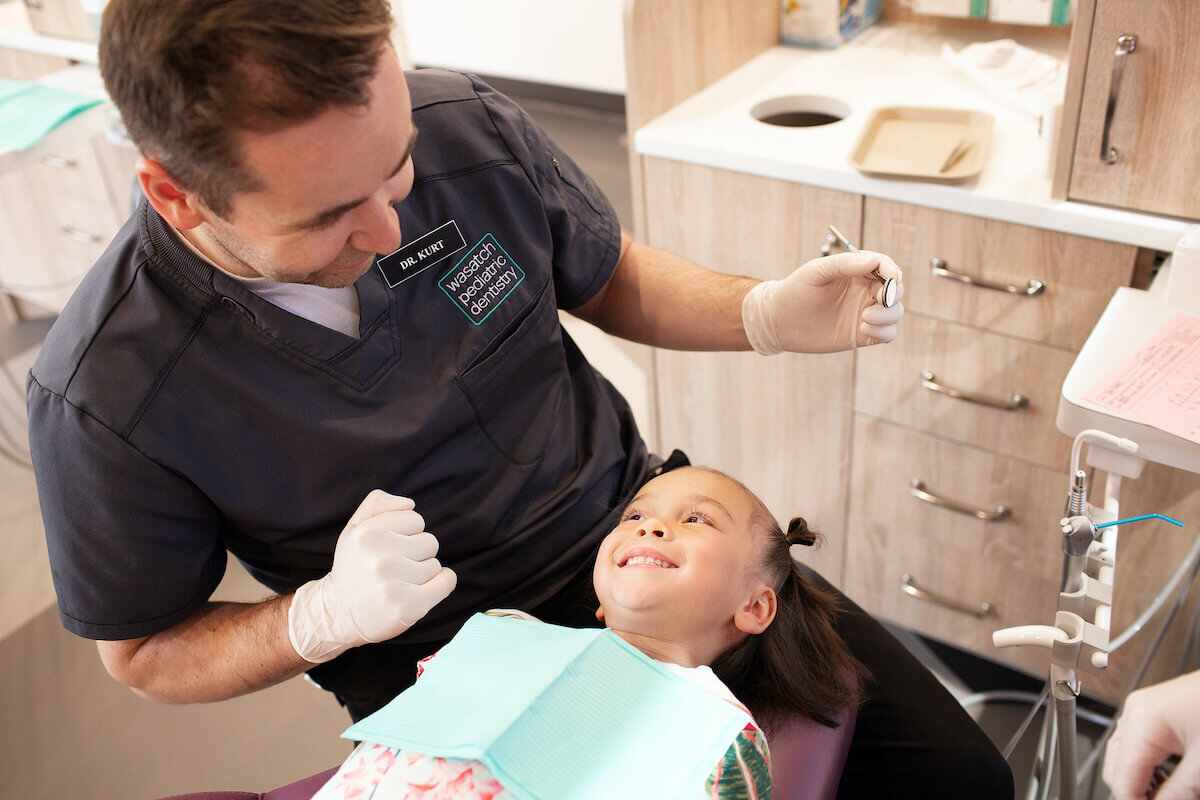
When caught early during a routine checkup at Wasatch Pediatric Dentistry, treating tooth decay is quick, gentle, and completely stress-free. Our team focuses on conservative treatments that prioritize your child's comfort every step of the way.
For demineralized white spots, professional fluoride varnish or dental sealants can strengthen enamel and stop decay in its tracks without any drilling or numbing. If a small cavity has already formed, Dr. Kurt Vest uses child-friendly techniques to remove the decay gently and place a durable, tooth-colored filling.
To help anxious kids feel entirely at ease, our Providence office features overhead ceiling TVs with their favorite movies, playful explanations using our "Tell-Show-Do" method, and mild sedation options like nitrous oxide ("laughing gas") when extra comfort is needed.
Protect Your Child's Smile at Wasatch Pediatric Dentistry
Spotting potential decay at home is a great first step, but regular professional checkups are the best defense against cavities. Routine digital X-rays and thorough exams allow us to catch hidden spots between teeth that are completely invisible to the naked eye.
If you have noticed a suspicious white or dark spot on your child’s teeth, or if it has been more than six months since their last cleaning, our team is here to help. Give our office a call today or visit our online booking page to schedule a comfortable, stress-free visit with Dr. Kurt Vest!